The highlights you came to see
The works are listed in the optimized route order. We recommend following the indicated sequence to minimize walking.
1 · 10 min
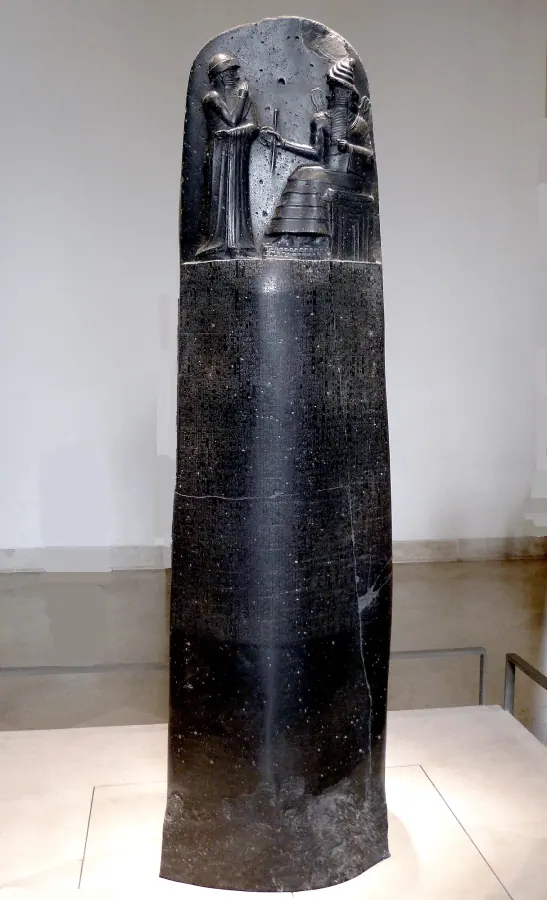
Code of Hammurabi
Room 227, Richelieu wing, Level 0
This stele joins royal image, divine authority and an extensive legal inscription in one public monument. It is important not because every rule resembles modern law, but because it shows a Babylonian king presenting justice as a central duty of government and preserving decisions in a durable, highly organised written form.
2 · 10 min
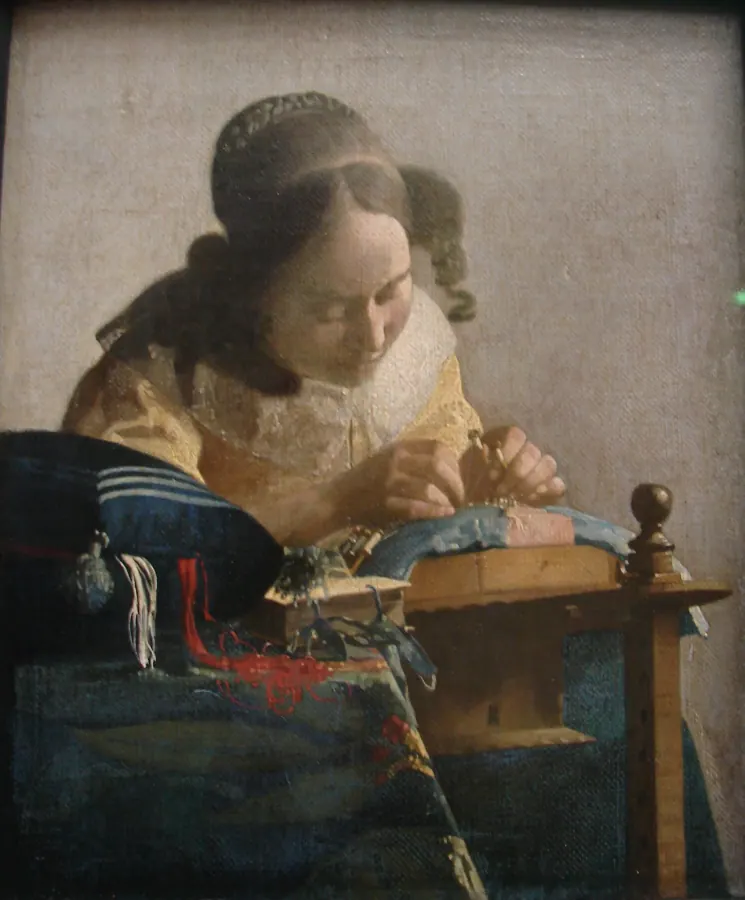
The Lacemaker
Room 837, Richelieu wing, Level 2
One of Vermeer's smallest paintings creates an unusually intense image of concentration. Rather than expand the room around the figure, he brings the viewer close to her hands and work. Precise focus, softened foreground threads and controlled colour make vision itself part of the subject.
3 · 10 min
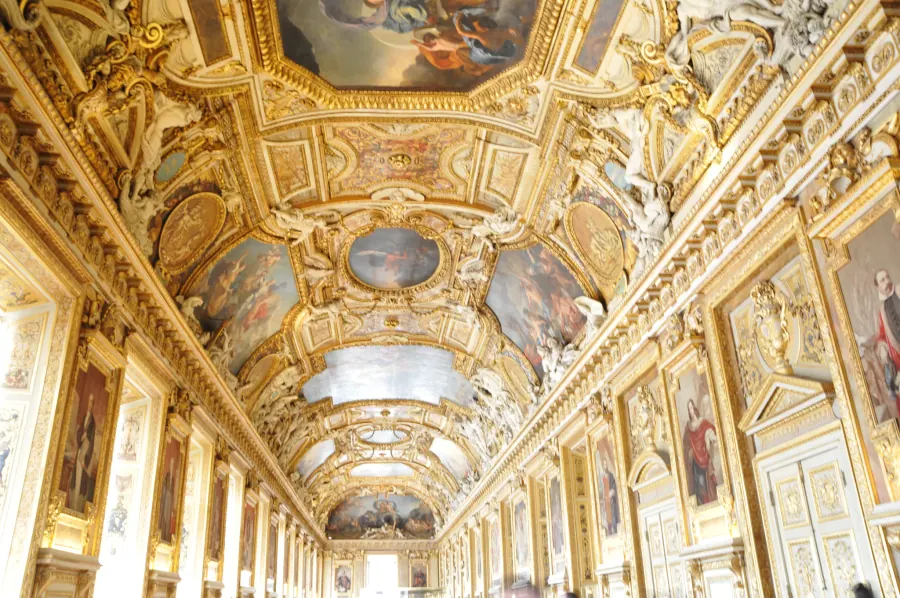
Apollo Gallery
Galerie d’Apollon, Room 705, Denon wing, Level 1
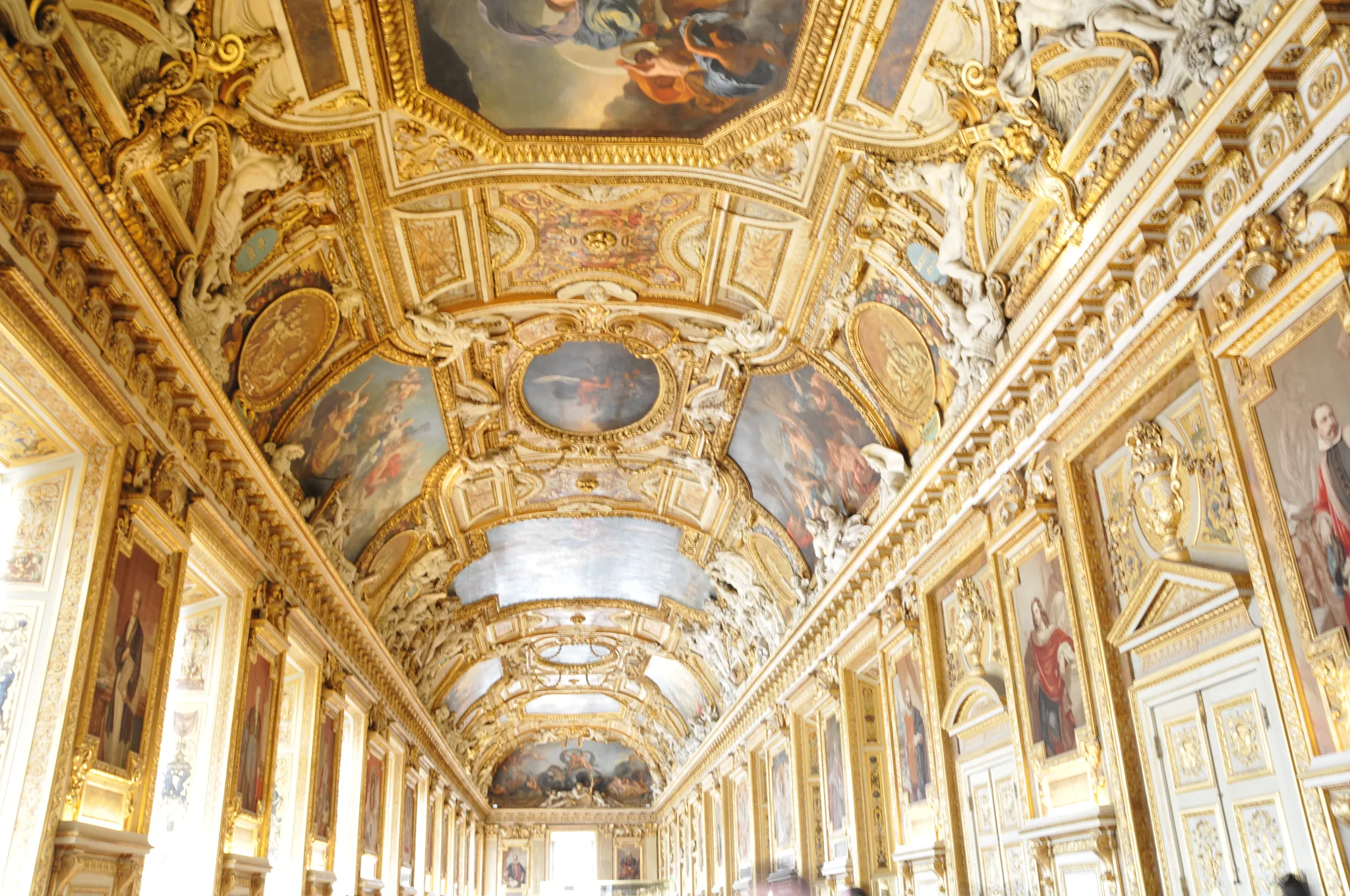
The Galerie d'Apollon is both a work of architecture and a statement of royal power. Created for Louis XIV after a palace fire, its coordinated painting, sculpture and gilding became an experimental model for the Hall of Mirrors at Versailles. Later additions turned it into a layered history of French court art rather than a room from a single moment.
4 · 10 min
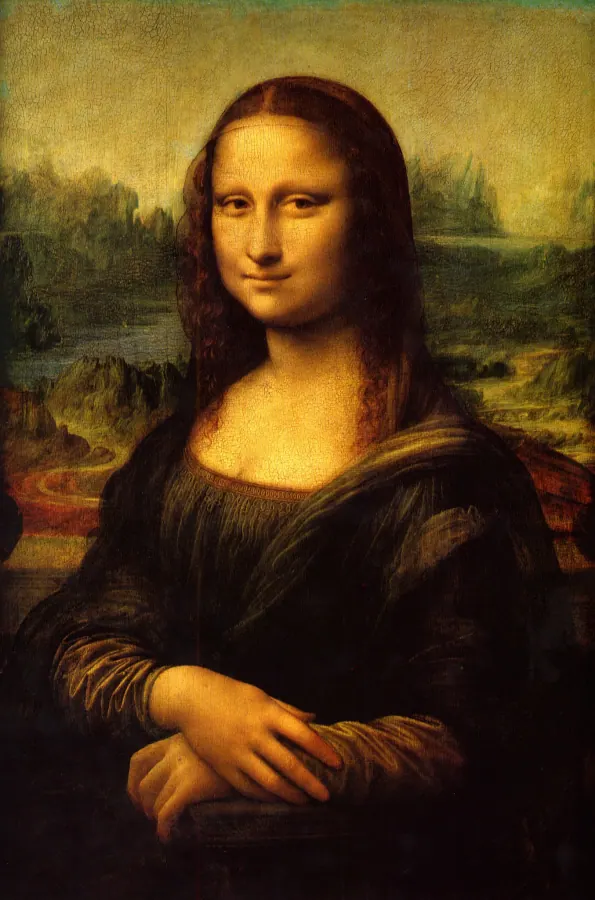
Mona Lisa
Salle des États (Salle de la Joconde), Room 711, Denon wing, Level 1
The Mona Lisa transformed the conventions of portraiture into an encounter that still feels immediate. Leonardo joined a lifelike presence to an imaginary landscape and softened hard contours through extraordinarily gradual transitions of light and shade. Its importance does not rest only on modern fame: the painting condenses his long investigation of vision, atmosphere and human expression into one small poplar panel.
5 · 10 min
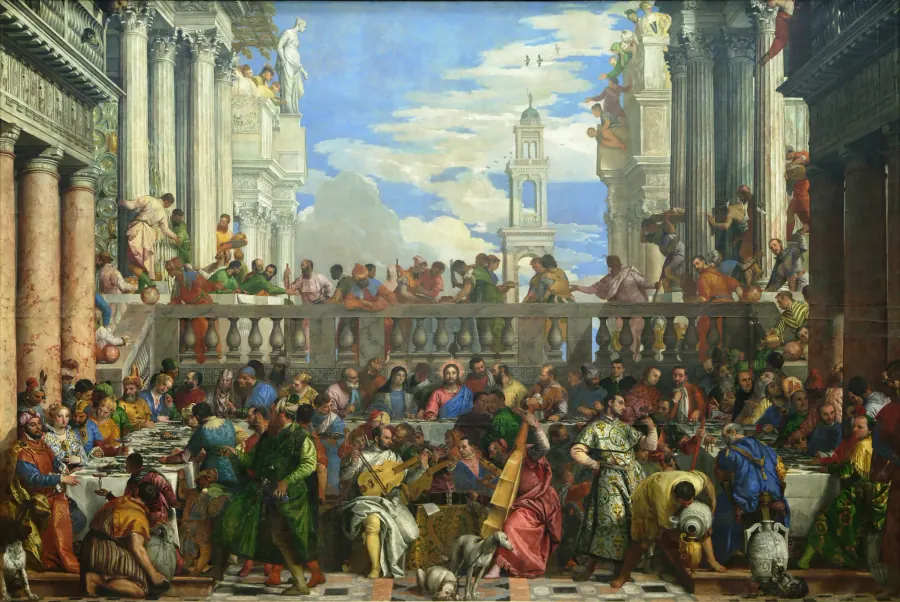
The Wedding at Cana
Salle des États, Room 711, Denon wing, Level 1
Veronese expanded a Gospel miracle into a vision of Venetian ceremony on an architectural scale. Painted for a monastic refectory, the canvas joins sacred narrative, contemporary luxury, portrait-like figures, music and theatrical space. Its immense size makes looking an act of navigation: the central event must be found within abundance.
6 · 10 min
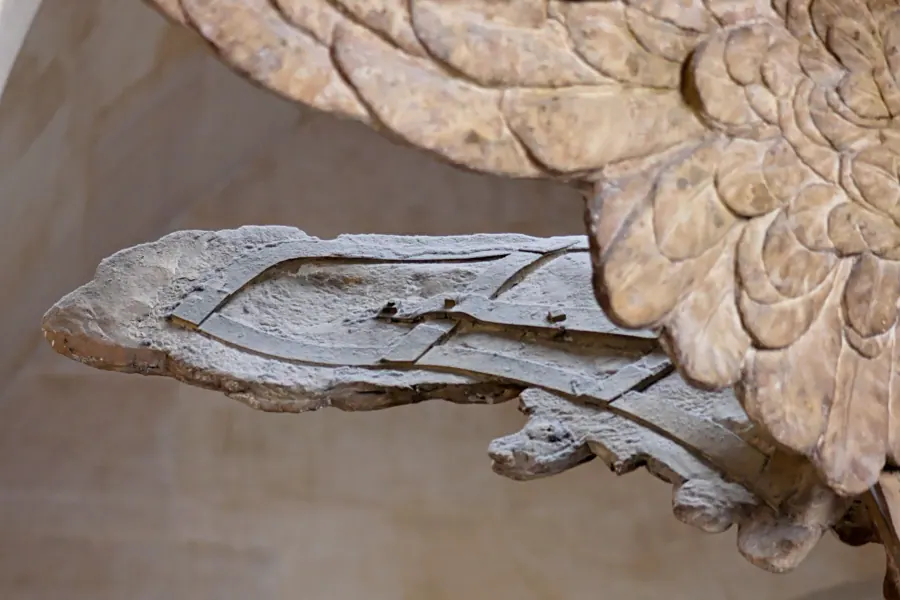
Winged Victory of Samothrace
top of the Daru staircase, Room 703, Denon wing, Level 1
The Winged Victory turns a commemorative monument into an image of arrival. Nike does not merely stand on a ship: wind presses fabric against her body, wings open behind her and the prow projects into imagined sea air. The ensemble is one of the most ambitious surviving Hellenistic experiments in making sculpture, architecture and setting act together.
7 · 10 min
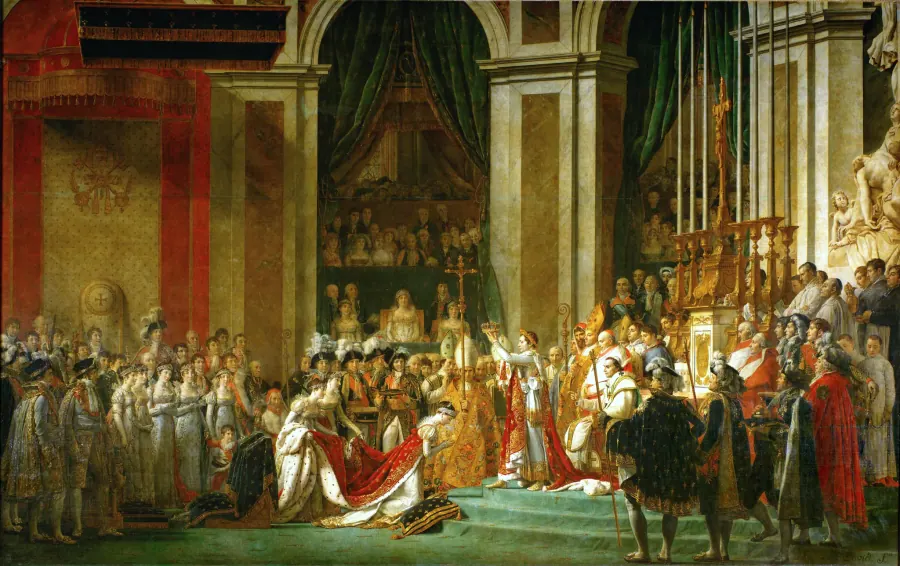
The Coronation of Napoleon
Salle Daru, Room 702, Denon wing, Level 1
David turned a carefully staged imperial ceremony into one of Europe's largest political images. Commissioned by Napoleon, the painting does more than record an event: it arranges identifiable participants, architecture, costume and ritual to make the new regime appear orderly, legitimate and historic.
8 · 10 min
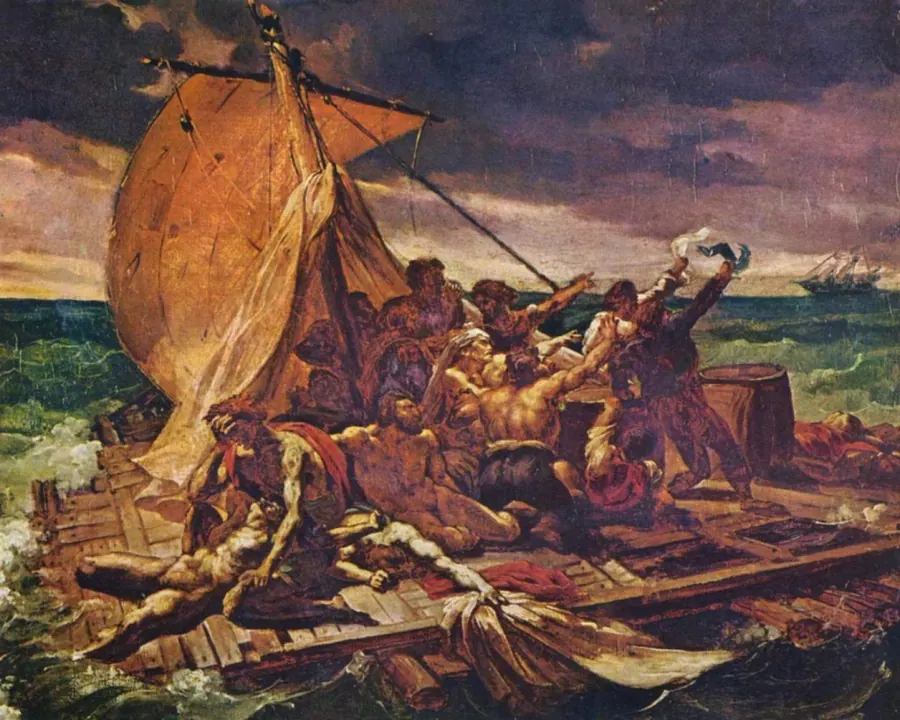
The Raft of the Medusa
Salle Mollien, Room 700, Denon wing, Level 1
Géricault gave monumental history-painting scale to a recent catastrophe and its human consequences. The subject was not ancient myth or a royal victory but the 1816 wreck of the frigate Méduse. The painting became a manifesto for Romantic art by combining factual urgency, bodily extremity and a composition balanced between rescue and despair.
9 · 10 min
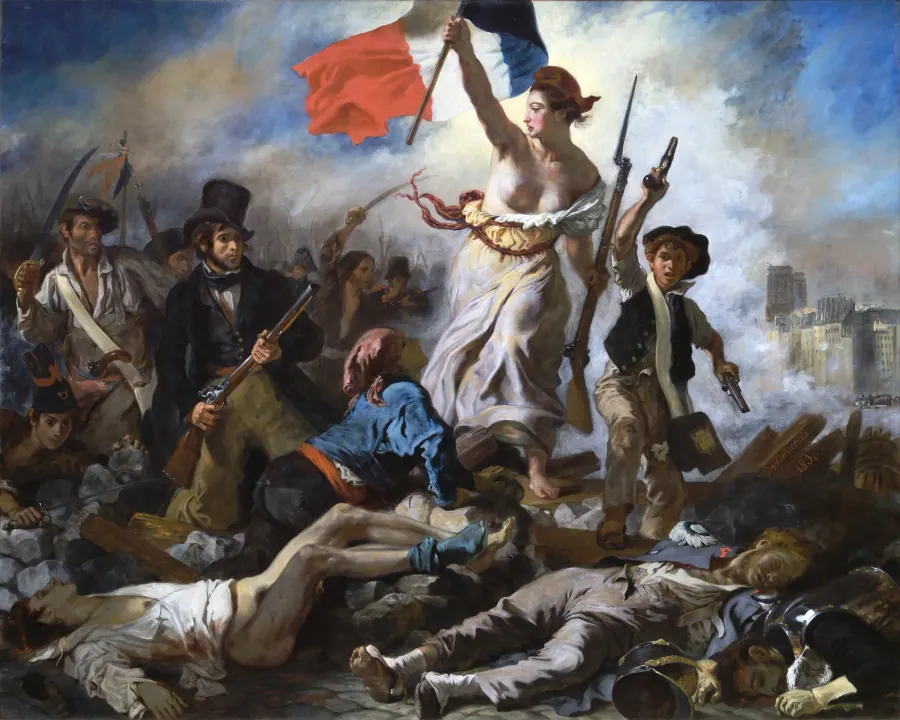
Liberty Leading the People
Salle Mollien, Room 700, Denon wing, Level 1
Delacroix made a recent political uprising carry the scale and authority of history painting. The work is not a record of the French Revolution of 1789: it responds to the July Revolution of 1830. By placing an allegorical Liberty among recognisably contemporary fighters and casualties, it joins symbol, news and collective memory.
10 · 10 min
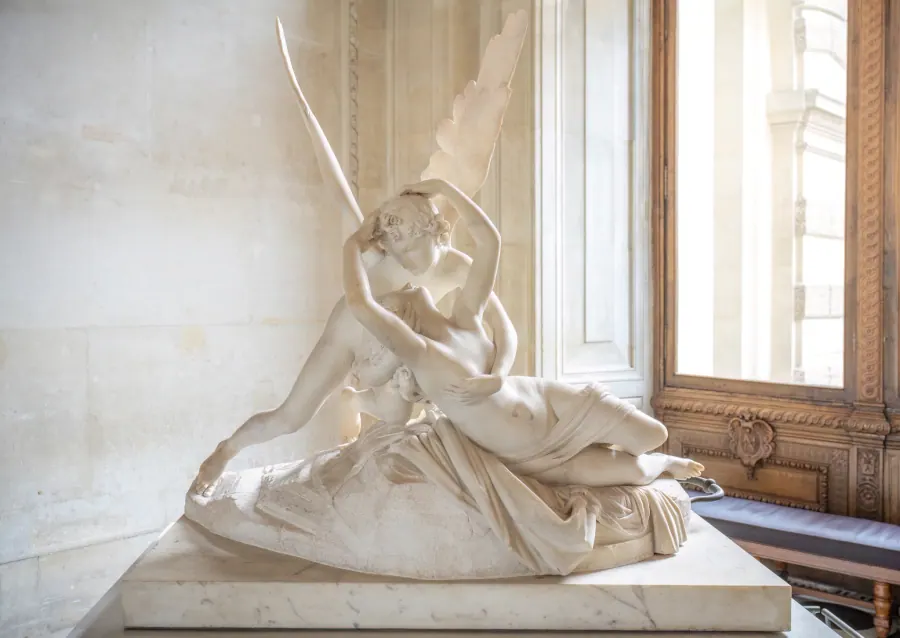
Psyche Revived by Cupid's Kiss
Room 403, Denon wing, Level 0
Canova made a complex two-figure embrace read as both tender narrative and carefully balanced sculpture. Created between 1787 and 1793, the marble group is a defining work of Neoclassical sculpture: antique subject matter is joined to highly finished surfaces and a composition designed to unfold as the visitor moves around it.
11 · 10 min
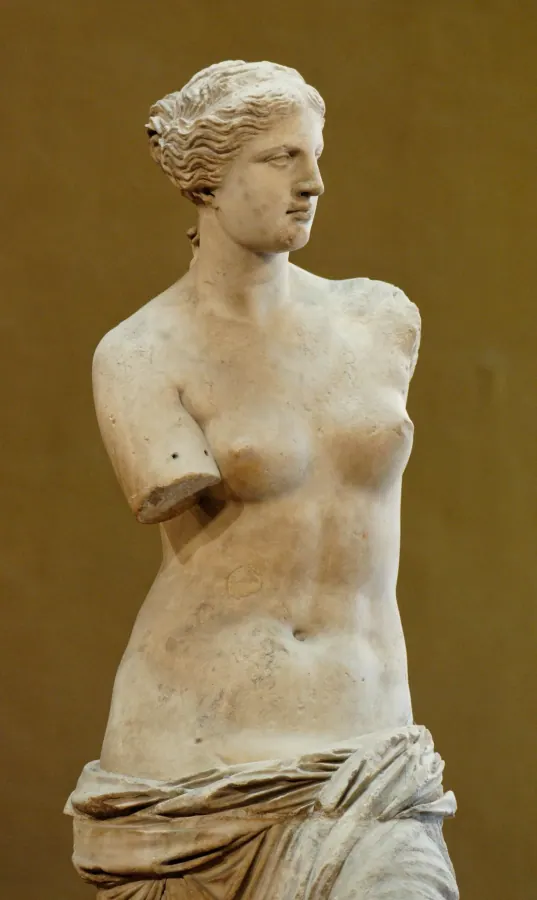
Venus de Milo
Room 345, Sully wing, Level 0
The Venus de Milo is a major example of Hellenistic sculpture looking back to the balanced ideals of Classical Greece. Its fame has made the missing arms seem almost intentional, yet the statue is important precisely because it combines a poised, idealised body with a twisting stance and deeply worked drapery that create movement around the figure.
12 · 10 min
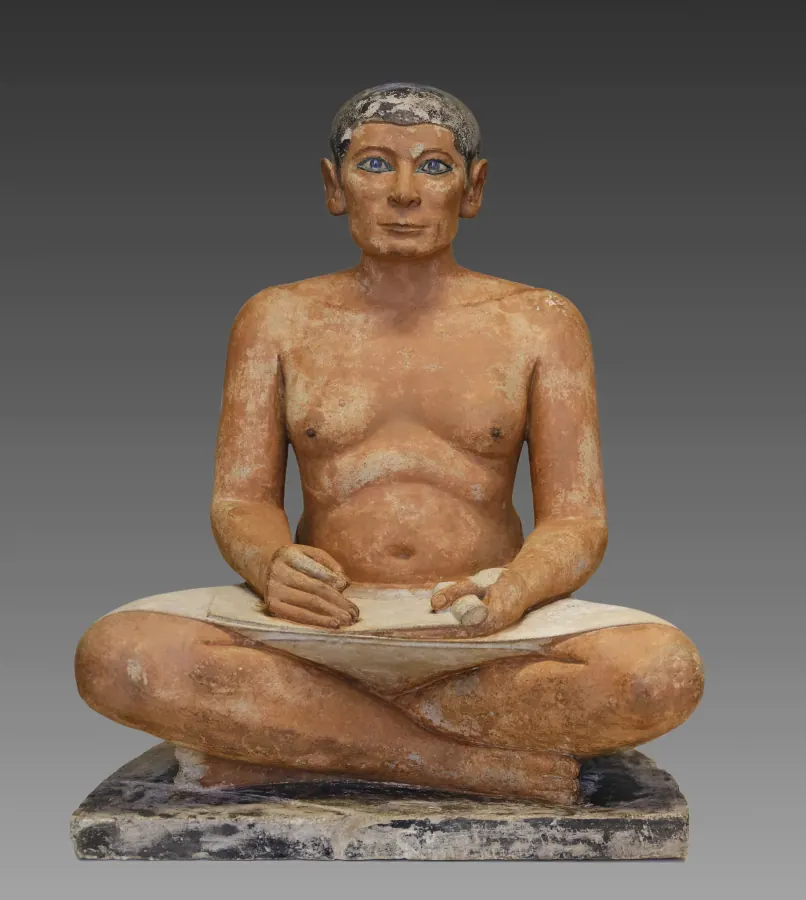
The Seated Scribe
Room 635, Sully wing, Level 1, display case 10
The Seated Scribe preserves an arresting image of alert intelligence from Egypt's Old Kingdom. Its painted limestone body and technically elaborate inlaid eyes differ from the idealised, timeless presentation often associated with royal sculpture. The unknown man appears ready to receive words and write, making attention itself monumental.
2 HOURS · 10 LANGUAGES · OFFLINE
Everything you need for a focused visit
Follow a curated route
Listen to the audio guide
Read descriptions in your language
Audio guide in your language
Works fully offline
Free to use
Available in 10 languages
How it works
- 1Download the guide
- 2Choose your language
- 3Keep track of your progress
- 4Start the 2-hour tour
- 5Follow each stop
- 6Listen and read in your language
NO SIGNAL? NO PROBLEM.
Works completely offline
After purchase, download the audio guide language you need. The route, written descriptions, progress and badges stay available inside the museum.
Frequently asked questions
Is the app free?
Yes. The app is free to download and use for the route and written guide. The audio guide is available as a one-time in-app purchase for 2.99 EUR.
Does it work offline?
Yes. The written guide stays available offline after installation. Audio can be downloaded by language after the 2.99 EUR in-app purchase.
Is it an official museum app?
No. This is an independently created visitor guide and is not affiliated with, endorsed by or sponsored by the museum unless explicitly stated.
How long does the tour take?
The curated route is designed to cover the essential highlights in about two hours, although you can pause or spend longer at any stop.
Do I need internet inside the museum?
No. The content needed for the visit is available offline, so poor reception or unavailable museum Wi-Fi will not interrupt the tour.
Does the app include audio?
Yes. Every stop can include audio. The written guide is free, while audio playback is unlocked with the 2.99 EUR in-app purchase.
Are descriptions and audio available in my language?
Yes. The written descriptions use the language selected in the app. After purchase, you can download the audio guide in any supported language.
Which languages are supported?
The guide supports English, Italian, French, Spanish, German, Portuguese, Dutch, Japanese, Chinese and Korean, including both text and audio.
Louvre Museum
Ready to see the highlights?
Descriptions and audio guide in your language.